
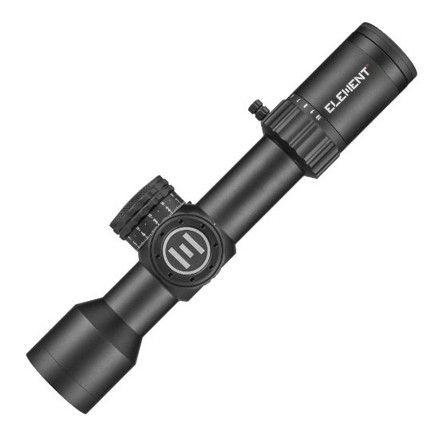
Mounts, rangefinders, lens protection, batteries and other accessories all affect how practical, reliable and enjoyable the finished setup will be. Buying each item separately without considering how they work together can lead to compatibility problems, unnecessary weight or equipment that does not suit the intended use.
A well-planned setup starts by considering the type of shooting or observation involved, the usual distances and the conditions in which the equipment will be used.
Choose the Scope for the Intended Distance
Higher magnification is not automatically better.
For closer-range target shooting, a lower magnification range can offer a wider field of view and make it easier to acquire the target. Longer-distance use may benefit from increased magnification, but image quality, stability and parallax adjustment become increasingly important.
Common variable-magnification scopes provide flexibility across different distances. The right choice depends on the rifle, target size and shooting environment rather than simply selecting the largest magnification available.
Lens quality should also be considered. Clear glass and effective light transmission can make a greater practical difference than an impressive specification that produces a dim or unclear image.
Solware’s optics range includes traditional telescopic sights, air-rifle scopes, binoculars, rangefinders, night vision and thermal products across a wide range of budgets.
Pay Attention to Parallax
Parallax is particularly important for air-rifle users because many shots are taken at shorter ranges than those associated with centrefire rifles.
A scope designed primarily for long-range firearms may have a fixed parallax distance that is unsuitable for close-range airgun shooting. This can cause the reticle to appear to move across the target when the shooter’s head position changes.
Scopes with adjustable objectives or side-focus controls allow the user to correct parallax for different distances. Models designed for air rifles may also offer lower minimum parallax settings, making them better suited to typical pellet trajectories and shooting ranges.
Do Not Overlook the Mounts
Even an excellent air rifle scope cannot perform properly if it is attached using unsuitable mounts.
The mounts must match the rail type, tube diameter and intended scope position. They should hold the optic securely without placing unnecessary pressure on the tube.
Height is another consideration. Mounts that are too low may cause the objective lens to touch the barrel or action, while mounts that are too high can make it difficult to achieve a consistent cheek position.
Some air rifles, particularly spring-powered models, can place unusual demands on scopes and mounts. Strong, correctly fitted equipment helps prevent movement and protects the zero.
When Does a Rangefinder Help?
Estimating distance accurately can be difficult, particularly across open ground or in poor light.
A laser rangefinder provides a fast distance reading, helping the user understand how far away the target or observation point is. This can support better decision-making and more accurate adjustment of the optic.
Standalone rangefinders remain popular, but some modern thermal and digital optics now include rangefinding technology as part of the unit. Solware also stocks smart rangefinding accessories designed to integrate with compatible digital and thermal systems.
An integrated device can reduce the amount of separate equipment being carried, while a standalone rangefinder can be used across several different setups.
Essential Optics Accessories
Several inexpensive accessories can protect the optic and make it easier to use.
Lens caps help prevent dust, rain and accidental damage. A proper lens-cleaning kit is preferable to wiping glass with clothing, which can introduce grit and scratch the lens coatings.
A sunshade may reduce glare in bright conditions, while an anti-reflection device can help control unwanted reflections. Spare batteries or an external power supply are especially important when using digital night vision, thermal optics or illuminated reticles.
Other useful accessories can include:
- scope levels;
- throw levers for magnification rings;
- protective cases;
- replacement eyecups;
- mounting tools;
- rail adaptors; and
- IR illuminators for compatible night-vision equipment.
The right accessories should improve the setup without adding unnecessary complexity.
Think of the Equipment as One System
The most effective optics setup is not necessarily the one containing the most expensive individual items.
The scope, mounts, rifle, rangefinder and accessories should all be suitable for the same distances and conditions. A balanced setup will generally be easier to use, more reliable and better suited to its intended purpose.
Solware supplies optics and accessories for air rifles, rifles and outdoor observation, including telescopic sights, mounts, rangefinders, thermal monoculars, night vision and supporting equipment.
Visit https://www.solware.co.uk/ to explore the current optics and accessories range.
For advice on compatibility or product availability, call 01827 215222 or email [email protected].